We Are The UKs Leading Commercial Energy, And Sustainability Consultancy
Energy Prices Supported by Middle East Tensions and Supply Concerns
Gas and power markets remain elevated despite signs of diplomatic progress, as storage concerns and supply risks continue to support prices.
Let Us Contact You:
.jpeg)
Market Update:
- Markets closed higher on Wednesday as tensions in the Middle East remained high after attacks on Kuwait’s airport.
- From the geopolitical side, prices should retreat this morning as Lebanon and Israel agreed to implement a ceasefire, a key component to progress to a resolution of the wider conflict.
- Also, a “largely symbolic vote” in the US House to block a continuation of the war shows growing “unease among republicans” according to Reuters.
- Oil has fallen 1% this morning, now at $96.7/bbl
NATURAL GAS:
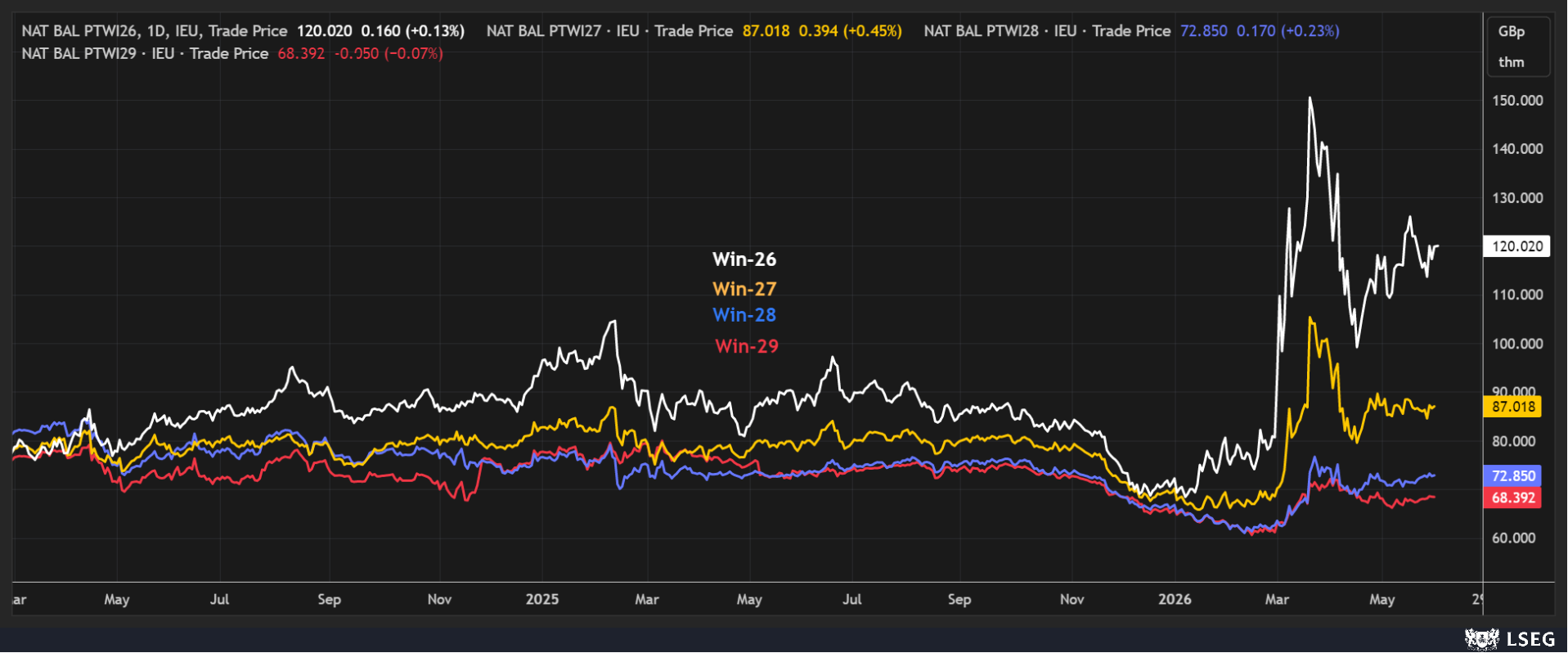
This morning, the NBP front month contract is pricing at 118.62p/th at the time of writing. This is similar to last night’s front month closing price of 118.36p/th. While there has not been much movement overnight, over the week gas prices have been lifted through a combination geopolitical risks, supply concerns and cooler temperatures.
Despite positive developments towards talks of peace last week, tensions have been renewed in the Middle East following reports of further airstrikes in the region. Ongoing uncertainty surrounding the conflict continues to support wider energy markets, as traders assess the potential risk to global energy infrastructure and supply chains. While European gas supplies remain stable for now, heightened geopolitical risk has added a premium to prices.
As we have been observing over the past weeks, geopolitical developments have had great influence on market sentiment. Reports overnight suggest Israel and Lebanon have reportedly discussed the possibility of a ceasefire if attacks by Hezbollah are stopped. While this could lead to easing geopolitical tensions and a softening on prices, uncertainty remains high and traders are continuing to price in the risk of further disruption until there is greater clarity.
On top of geopolitical tensions, fundamental gas market conditions remain supportive. European storage injections continue to lag behind seasonal norms, with storage sites currently around 41% full, marking the lowest level for this point in the year in five years. The slower pace of injections has increased focus on the challenge of rebuilding inventories ahead of winter, particularly if stronger demand or supply disruptions emerge over the coming months.
Weather forecasts have provided further bullish momentum, with cooler conditions expected across parts of Europe over the coming days. The lower temperatures are anticipated to increase heating demand compared to the warmer conditions experienced last week. This further contributes to the bullish movement of the market.
Overall, a combination of increasing geopolitical tensions, slower storage replenishment and cooler weather forecasts has provided strong support for European gas prices, helping to drive the front month contract higher this morning.


ELECTRICITY:
Power prices have continued to move higher this week, broadly mirroring gains across the gas market due to the ongoing geopolitical tensions in the Middle East, increasing uncertainty in relation to security of supply. These concerns over potential disruptions to global energy supplies have helped support both gas and power markets, particularly at the front of the curve.
In addition to this, further bullish support has come from the restriction of nuclear availability in the UK remaining throughout June. Five, out of the UK's nine, nuclear reactors have been offline at various points this month, reducing baseload generation and increasing reliance on alternative sources of power generation. This tighter supply outlook has provided additional support to power prices.
Carbon markets have also contributed to the upward movement in power prices, with EUA carbon prices rising towards €80/t on the back of stronger demand. Higher carbon costs increase the marginal cost of thermal generation, which in turn feeds through into power prices.
However, some bearish factors remain present. Wind generation is forecast to improve over the next two weeks, which should increase renewable output and help offset some of the current supply-side pressures. In addition, electricity demand is expected to gradually ease as we move further into the summer period.
Overall, geopolitical risks, reduced nuclear availability and stronger carbon prices have been the key drivers behind the recent increase in power prices, outweighing the more bearish outlook for wind generation and seasonal demand which could look to contribute more to price movement in a few weeks’ time.
Latest Price:
Latest Gas & Power Annual Chart:


Speak With Us
We understand the complexities of navigating your energy, book in a time to speak with us below
Book A Consultation
Get In Touch